Will Robie
The GuiltyWill Robie is a professional operative whose identity has been built around planning, precision, and control. When a mission goes wrong and he cannot trust what he sees or make himself pull the trigger, the failure reaches beyond his work: it sends him back to his estranged father and the past he had kept at a distance. His return becomes both an investigation into murder and an effort to recover a connection to family that secrecy and years of separation have strained.
Identity and Professional Crisis
Robie is introduced crouched at a window in a deserted building in a country then allied with the United States, holding a sniper rifle equipped with world-class optics. The setting makes the uncertainty of his work explicit: the country’s allegiance might change, and his task is not an ordinary long-range killing performed unseen. He has spent years alone in vacant buildings abroad, tactically positioned with a weapon, and the opening places him within a life defined by secrecy and calculated danger.
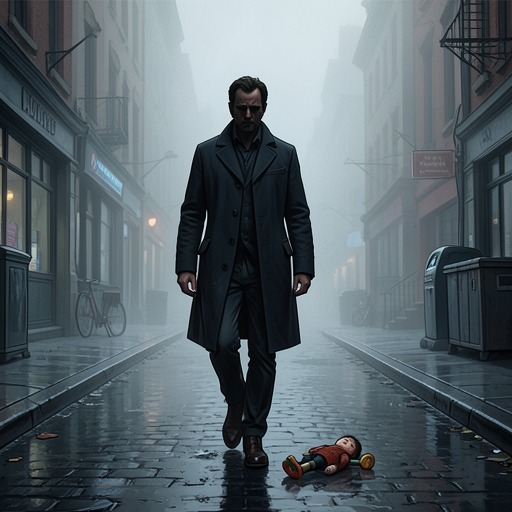
That professional discipline is shaken by the death of a little girl with curly dark hair. Robie knows she is dead, knows the operation’s communication channel has classified her as collateral damage, and rejects that label as an answer to what happened. The message identifies her as someone’s daughter but leaves her identity unclear. For Robie, the official framing cannot erase the face of the child or the irreversibility of her death; he wants to understand how the mission produced an outcome he had not intended.
Later, on the Arlington Memorial Bridge, he recognizes the scale of his failure: he had seen a child where there was no child and apparently hallucinated during a mission, something he had never experienced before. His hands tremble, and the cold, controlled state he expects to enter—“cold zero”—never arrives. He has been placed on leave and cannot return to field work until he has sorted out what is happening, if he can. The crisis is therefore practical as well as psychological: a person whose work depends on accurate perception and action no longer trusts either.
Return to the Past
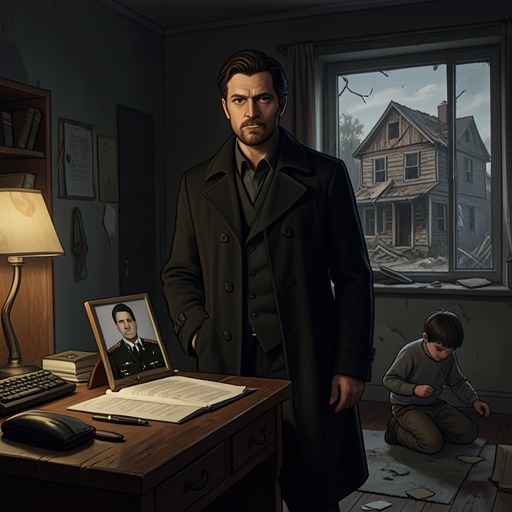
Robie’s return to his old life is prompted by his father’s being charged with murder. For years, Robie has thought about his father, but the secrecy of his work kept him from contacting him or considering a return home. His earlier hope of beginning a new life with Laura Barksdale had failed; he arrived on the East Coast alone, confused, and angry. He describes his present direction as a reversal of his usual forward motion: “So now, to go forward, it looks like I have to go back.” The admission matters because he has no operational plan for this return. He has executed many missions with a plan, but now he does not know how to proceed.
The family link is initially unsettled even in small details. When a woman tells him that a boy is named Tyler and called Ty, Robie flinches because Tyler is his own middle name. She identifies him as Will Tyler Robie, and he asks whether his father told her; she says she saw it somewhere. The exchange makes his full name—and its connection to his family—suddenly present in a conversation where he had not expected it. It also anticipates the importance of Tyler Robie, his young half-brother, in the dangers that follow.
Robie’s first direct confrontation with his father is strained and incomplete. He asks, “Did you kill Sherman Clancy?” His father says nothing. Robie says he does not think his father did it and argues that the killer remains at large, perhaps the same person who killed Janet Chisum. The question is not simply an accusation: Robie is trying to distinguish his father’s guilt from the unresolved murders around him, even as their silence makes it impossible to settle the matter through an easy exchange.
Investigating the Killings
As Robie pursues the case, he acts alongside Jessica Reel, another operative who arrives with a rifle over her shoulder and tells him she has had to come save him. Their partnership brings the habits of his professional life into a local investigation, but the stakes are no longer distant or abstract. Robie and Reel take weapons and night optics to the place where he and Sara Chisum first met. He hides behind bushes while Reel takes the high ground and promises to alert him if she sees anything. The coordinated vigil turns that meeting place into an attempted point of intervention.
The attempt fails. Robie and Reel drive back to the Willows mostly in silence, knowing that they have failed their mission and someone has died. Reel says Sara was their best chance to make progress and that, whatever Sara’s character, nobody was entitled to shoot her. Robie acknowledges the loss rather than disguising it as a successful operation; the pair’s next option is Pete Clancy. Sara’s death thus narrows the investigation and gives their failure a human consequence, repeating the problem that has already unsettled Robie’s professional identity: action does not guarantee that the person he hopes to protect will survive.
The threat around the case becomes more explicit when Robie’s father warns that the people Robie has angered will want to kill him. Robie answers that he assumes so, but his father sharply replies that there is no assumption about it. The exchange shows the difference between Robie’s measured acceptance of danger and his father’s certainty about the people involved, while connecting Robie’s investigation to the Rebel Yell. Later, after Victoria and Ty are taken, Robie tries to steady his father and says he believes they may have been taken to the old Clancy farm. He also reveals that the person who killed Sara was driving his father’s Range Rover: a New Orleans Saints sticker had covered a bullet hole. The vehicle detail links a concrete clue to the murder and gives his father a new reason to understand that the case has reached his family.
Family, Revelation, and Change
Robie’s conversation with his father eventually breaks through the language of the case. He explains that his work demands near-perfect performance, but that he has not been perfect on his last two missions: he killed someone he should not have, and on the next operation he saw a little boy and an old man who were not there. He tries to continue, but the words become muddled. The confession makes plain that he cannot present himself to his father as the untroubled professional he has been trying to be. His father’s response reaches back to Robie’s earlier life with Laura, telling him that he had said Robie left without her. Their exchange draws the old separation into the same room as Robie’s present failure, without resolving either through a simple explanation.
The family danger culminates in a revelation that Robie has scarcely had time to absorb: his high-school sweetheart is now his stepmother, and she is the killer they have been searching for. The discovery fuses the investigation with the family history that brought him home. In the immediate danger, Robie cannot pause to reckon with the transformation of that relationship. He ordinarily would have attacked and killed an opponent, but he has no weapon, one limb is useless, and he has a two-year-old in his one good arm. The circumstances strip away the professional response on which he has relied and leave him protecting a child while physically constrained.
At the story’s close, Robie tells his father, “You don’t have to look back anymore. Just look forward.” His father asks what he has left, and Robie answers that he has Ty—and then adds, with Reel’s encouraging glance, that he has Robie as well. The reassurance reverses Robie’s earlier insistence that he must go back in order to move forward: he now offers his father a future grounded in the relationships still available to them. Robie’s own return has not erased the past or repaired every loss, but it has changed his relation to it. Instead of leaving the family behind as he once did, he claims a place in it.
Narrative Role
Robie’s arc joins an operative’s breakdown to a son’s return. The opening image of a man positioned at a window with a precision weapon gives way to scenes in which his sight, judgment, and ability to act are all in question. A child’s face persists where an official label would close the matter; a hallucination makes perception itself suspect; and the search for a murderer leads not away from intimacy but directly into it. His crisis is not presented as a clean professional setback followed by instant recovery. It changes what he must confront and makes his old reliance on planning inadequate.
The repeated movement between looking back and looking forward gives the character arc its shape. Robie returns because his father is accused and because his last assignment has left him unable to continue as before; in the course of the investigation he uncovers a killer within his own family circle. Yet the concluding assurance to his father is not a claim that the damage has vanished. It is a commitment to face the future with the people who remain, including Ty and his father. For Robie, that commitment marks a different kind of action from taking a shot: it requires staying present to family rather than keeping the past at a safe distance.